Oil sludge is one of the most challenging hazardous wastes generated by petroleum extraction, refining, and storage activities. Composed of a complex mixture of hydrocarbons, water, heavy metals, and solid impurities, oil sludge poses serious environmental and health risks if not properly managed. Traditional disposal approaches such as landfilling, incineration, and solidification have long been used, yet each carries critical shortcomings. As environmental regulations tighten and resource efficiency becomes a global priority, pyrolysis has emerged as a transformative solution that not only reduces pollution but also recovers valuable crude oil from waste.
The Fatal Flaws of Traditional Disposal Methods
Historically, landfilling and solidification have been common practices for oil sludge management. While these methods appear straightforward, they essentially bury a valuable petroleum resource underground. Oil sludge still contains a significant proportion of recoverable hydrocarbons. When landfilled, these hydrocarbons are permanently lost, representing both an economic waste and a missed opportunity for resource recycling.
Moreover, long-term environmental risks remain. Even with engineered liners and containment systems, landfills are vulnerable to leakage over time. Toxic components, including heavy metals and residual hydrocarbons, may seep into soil and groundwater, creating persistent contamination that is costly and technically difficult to remediate.
Incineration presents another set of problems. Although it reduces volume quickly, high-temperature combustion can generate hazardous by-products such as dioxins and heavy metal-laden fly ash. These secondary pollutants require additional treatment and careful disposal. In essence, incineration transfers pollution from solid waste to air emissions and ash residues rather than eliminating it entirely.
Pyrolysis: Recovering Value Under Oxygen-Free Conditions
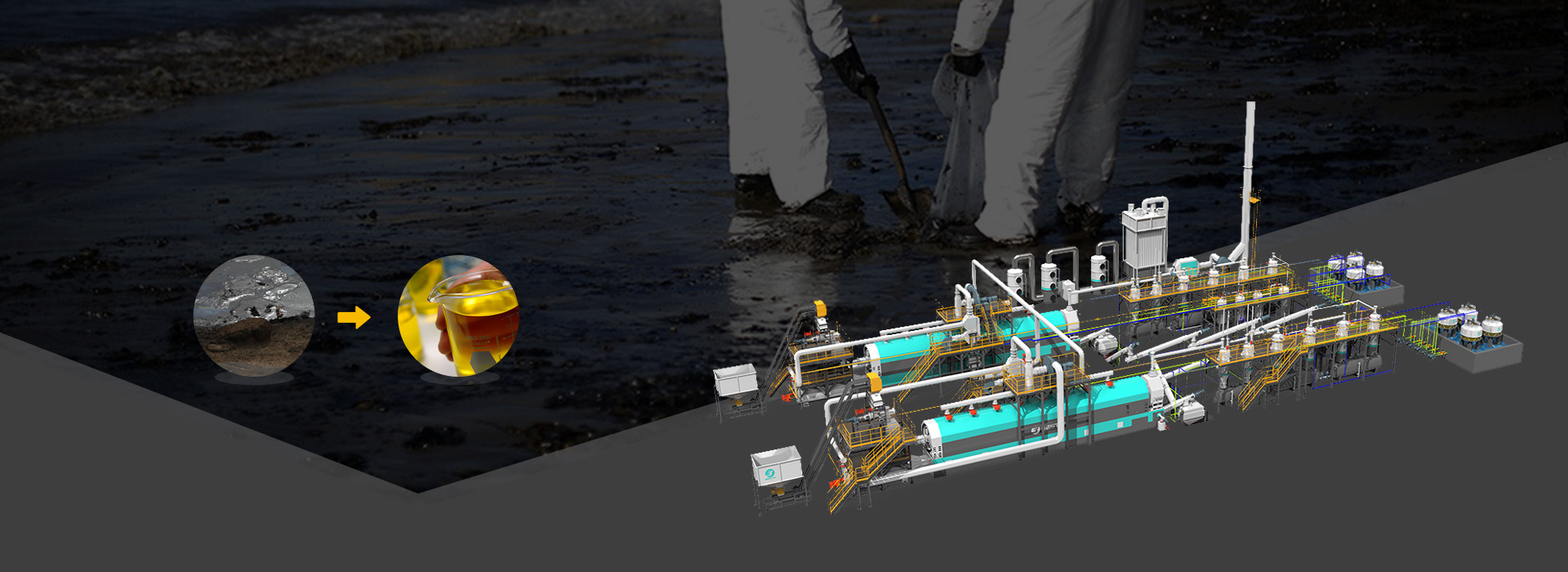
Unlike incineration, pyrolysis operates in an oxygen-free environment. Instead of burning hydrocarbons, it thermally decomposes them. When oil sludge is heated in the absence of oxygen, the hydrocarbon components evaporate and crack into smaller molecular structures. These vapors are then condensed into liquid oil, effectively recovering crude oil fractions that would otherwise be wasted.
A modern pyrolysis machine is engineered to maintain precise temperature control and continuous feeding systems, ensuring stable operation and high recovery efficiency. By preventing oxygen exposure, the process avoids the formation of dioxins typically associated with combustion. Instead of generating large volumes of toxic flue gas, pyrolysis converts waste into reusable energy products.
The most important advantage is resource recovery. Oil sludge often contains 10–50% oil content depending on its source. Pyrolysis enables operators to extract and refine this oil, turning hazardous waste into a marketable commodity. This shift from disposal to resource utilization aligns with circular economy principles.
Significant Volume Reduction and Environmental Risk Control
Another compelling reason to adopt pyrolysis lies in its strong waste minimization capability. During thermal decomposition, organic components are separated from inorganic solids. The overall volume of waste can be reduced dramatically, sometimes by more than 70%. What remains after treatment is typically a relatively inert solid residue with much lower hydrocarbon content.
Technologies such as a thermal desorption unit further enhance treatment efficiency by ensuring that hydrocarbons are thoroughly separated from contaminated solids. This reduces the environmental liability associated with long-term storage. Instead of managing unstable sludge for decades, operators are left with treated solids that are safer and easier to handle.
By minimizing leachable organic pollutants, pyrolysis significantly lowers the risk of soil and groundwater contamination. It also reduces the need for expansive landfill space, addressing land scarcity challenges faced by many industrial regions.
Integrated Systems Designed for Hazardous Waste Treatment
Specialized facilities are now designed specifically for sludge management. An advanced oil sludge pyrolysis plant integrates feeding, heating, condensation, gas treatment, and residue discharge into a unified system. These plants often incorporate gas recycling mechanisms, where non-condensable gases produced during pyrolysis are reused as fuel to heat the reactor, improving overall energy efficiency.
Such integration ensures compliance with strict environmental standards. Exhaust gases are typically treated through multi-stage purification systems to remove particulates and acidic components before release. Compared to incineration facilities, pyrolysis plants generate fewer air pollutants and provide higher overall energy recovery rates.
Leading environmental technology providers such as Beston Group continue to optimize reactor design, automation, and emission control systems. Their engineering focus centers on improving oil yield, ensuring operational safety, and reducing lifecycle environmental impact.
Conclusion: From Hazardous Waste to Valuable Resource
The question is no longer whether oil sludge should be treated, but how it should be treated responsibly and efficiently. Traditional disposal methods—landfilling, solidification, and incineration—either waste valuable petroleum resources or create secondary environmental hazards. Pyrolysis offers a fundamentally different approach. By operating under oxygen-free conditions, it transforms hydrocarbon-rich sludge into recoverable crude oil while significantly reducing waste volume and environmental risk. In doing so, it converts a long-standing pollution problem into an opportunity for sustainable resource recovery. For industries seeking both compliance and economic value, pyrolysis represents a forward-looking and practical solution.